New Tehran
The week-long state funeral for Ayatollah Ali Khamenei is being viewed across the world as the end of an era.
Sectarian divisions along the Shia-Sunni divide have long been a defining feature of the Middle East.




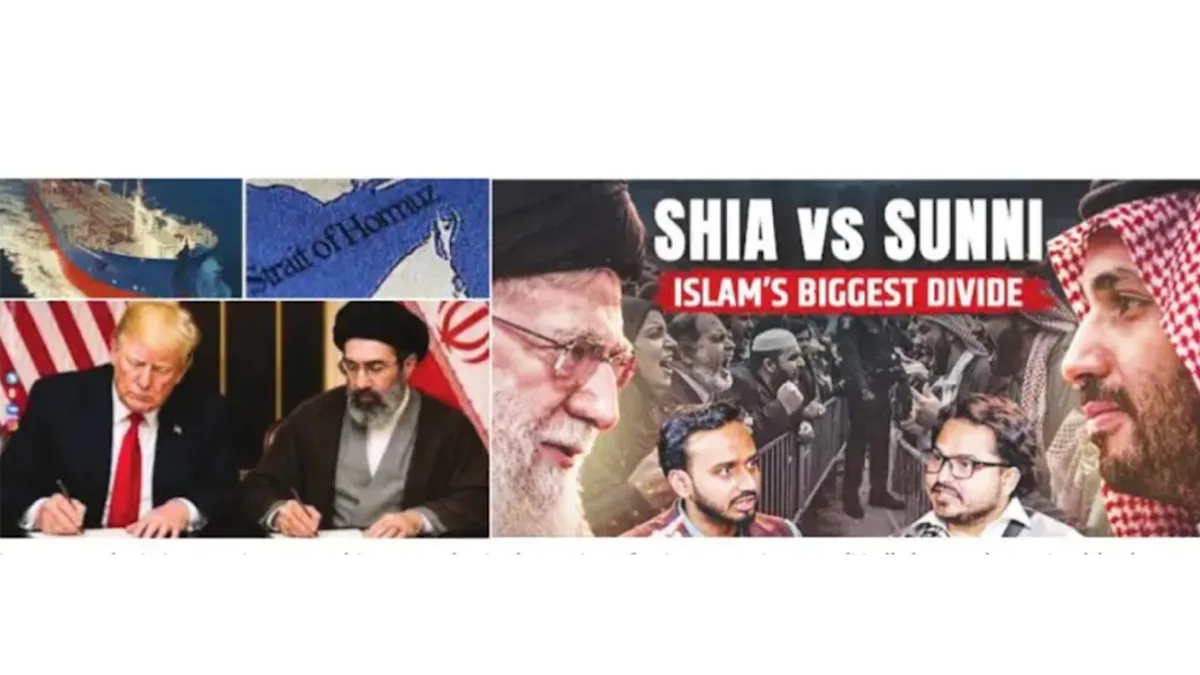
Photo:SNS
Sectarian divisions along the Shia-Sunni divide have long been a defining feature of the Middle East. However, in contemporary geopolitics, these identities are better understood not as fixed theological boundaries, but as politically activated frameworks that states and non-state actors mobilize in pursuit of strategic objectives. Over time, what began as historical and doctrinal differences have evolved into a set of overlapping political identities, often expressed through alliances, rivalries, and proxy conflicts.
Regional powers such as Iran and Saudi Arabia have, at different points, positioned themselves, explicitly or implicitly, as representatives of broader sectarian constituencies. This framing has contributed to the emergence of what are often described as “sectarian blocs,” though in practice these blocs are neither ideologically coherent nor politically unified. Instead, they function as flexible alignments shaped by shifting geopolitical incentives, domestic political pressures, and external interventions. The result has been a region in which identity and strategy are deeply intertwined, and where sectarian language often serves as a vehicle for geopolitical competition rather than its root cause. Despite periodic rhetorical convergence, particularly around opposition to Israeli policies and support for the Palestinian cause, the practical unity of these so-called blocs remains limited.
Advertisement
The recent Gaza conflict highlighted these divergences in stark terms. Iran and aligned actors such as Hezbollah and the Houthi movement engaged in varying degrees of military and political confrontation with Israel and its partners, while responses from several Arab monarchies were more restrained and diplomatically calibrated. Some states prioritized stability, economic interests, and existing security partnerships with the United States, even as public opinion in the region remained strongly sympathetic to the Palestinians. This divergence exposed a long-standing reality: that sectarian identity in the region does not map neatly into consistent political behavior.
Advertisement
Instead, state interests, regime security, and external alliances often override ideological alignment. Nevertheless, such inconsistencies can themselves become politically charged, opening space for competing narratives that frame inaction or engagement in moral, ideological, or sectarian terms. Against this backdrop, a prospective peace agreement between Iran and the United States raises a counterintuitive but important question: could de-escalation at the interstate level unintentionally intensify sectarian narratives at the regional level? While conventional wisdom suggests that peace reduces conflict, the structure of Middle Eastern politics suggests a more complex outcome.
A reduction in direct confrontation may not eliminate rivalry but instead transform its arena and language. A formal agreement between Iran and the United States would likely reduce the risk of direct military escalation and could ease tensions in strategically significant areas such as the Strait of Hormuz. It may also open limited channels for economic stabilization and diplomatic engagement. However, it would not automatically resolve the underlying competition for regional influence. Instead, it could shift rivalry away from conventional military and coercive domains toward more indirect forms of competition, including narrative construction, ideological legitimacy, and regional alignment politics. In such a scenario, political actors may increasingly interpret developments through ideological or sectarian frames.
Rather than competing through direct confrontation, states and aligned groups may seek to define the meaning of the agreement itself: whether it represents resistance, capitulation, betrayal, or strategic realignment. These competing interpretations can amplify identity-based narratives even in the absence of large-scale violence. From Iran’s perspective, any agreement with Washington would likely be framed domestically as a form of strategic endurance or moral vindication. The state has historically emphasized narratives of resistance against external pressure, and this discourse is deeply embedded in its political identity.
A negotiated settlement could therefore be presented not as compromise, but as evidence that sustained resistance compelled recognition from a major global power. This framing would serve both domestic legitimacy and regional signaling purposes. In turn, aligned actors such as Hezbollah in Lebanon and the Houthi movement in Yemen may adapt and reinforce this narrative, drawing legitimacy from Iran’s broader “resistance axis” discourse. However, it is important to emphasize that these actors are not monolithic extensions of Iranian policy. They are locally embedded organizations with their own political priorities, constituencies, and constraints.
While they may echo Iranian framing when useful, they also interpret regional developments through domestic political lenses. On the opposing side, rival regional actors may construct counter-narratives emphasizing Iranian expansionism or destabilizing behavior. In some cases, these narratives may take on sectarian overtones, particularly when political competition overlaps with existing Sunni-Shia identity frameworks. However, the degree to which such framing becomes dominant depends on strategic incentives rather than religious doctrine itself.
Importantly, the emergence of sectarian rhetoric is not inevitable. Many regional states operate on the basis of pragmatic and shifting alliances rather than rigid ideological blocs. Diplomatic normalization efforts in recent years between several Arab states and Iran demonstrate that geopolitical interests often override sectarian narratives when conditions permit. Nevertheless, even in periods of détente, symbolic competition can persist, particularly in media discourse, political messaging, and domestic political arenas. Certain states with internal sectarian sensitivities may be especially attentive to these dynamics.
Countries such as Bahrain, Kuwait, and others with significant Shia populations operate within delicate domestic political balances, where regional developments can influence internal perceptions of legitimacy and inclusion. Similarly, states with broader sectarian diversity may experience renewed rhetorical activation even if material conflict remains limited. The key risk in such contexts is not necessarily large-scale violence, but rather the politicization of identity in response to external narratives. Within Iran itself, the consequences of a post-agreement environment could be paradoxical. A weakened but surviving state, facing economic constraints, domestic pressures, and institutional competition, may have incentive to reinforce external “victory” narratives to maintain internal cohesion.
Institutions such as the Islamic Revolutionary Guard Corps (IRGC) may play a particularly important role in sustaining the logic of external resistance as a justification for domestic authority and regional engagement. In this sense, ideological signaling may increase even as diplomatic engagement expands. More broadly, a US-Iran détente may also reshape existing regional diplomatic frameworks, including initiatives such as the Abraham Accords. Shifts in geopolitical alignment could alter the perceived costs and benefits of normalization with Israel, particularly if regional actors reassess their strategic positioning in light of reduced US-Iran confrontation.
However, these effects would be indirect and heavily dependent on broader geopolitical sequencing rather than the agreement itself. Ultimately, the likely outcome of a peace agreement between Iran and the United States is not a straightforward reduction or increase in sectarian tension, but rather a transformation in its expression. Direct military confrontation and proxy escalation may decline, but narrative competition and symbolic framing may persist or even intensify in certain contexts.
Sectarian identity, in this sense, functions less as a cause of conflict than as a flexible language through which political actors interpret shifting regional realities. The key determinant of future sectarian dynamics will therefore not be the agreement itself, but how regional actors choose to respond to it: whether they instrumentalize identity for strategic and domestic purposes, or whether they pursue pragmatic realignments that gradually reduce the salience of sectarian framing in regional politics.
(The writer is Lt Gen PVSM, AVSM (Retd), and former Lt Governor of Andaman & Nicobar Islands and Puducherry)
Advertisement